A Remedy Carried in the Same Channels as the Deception
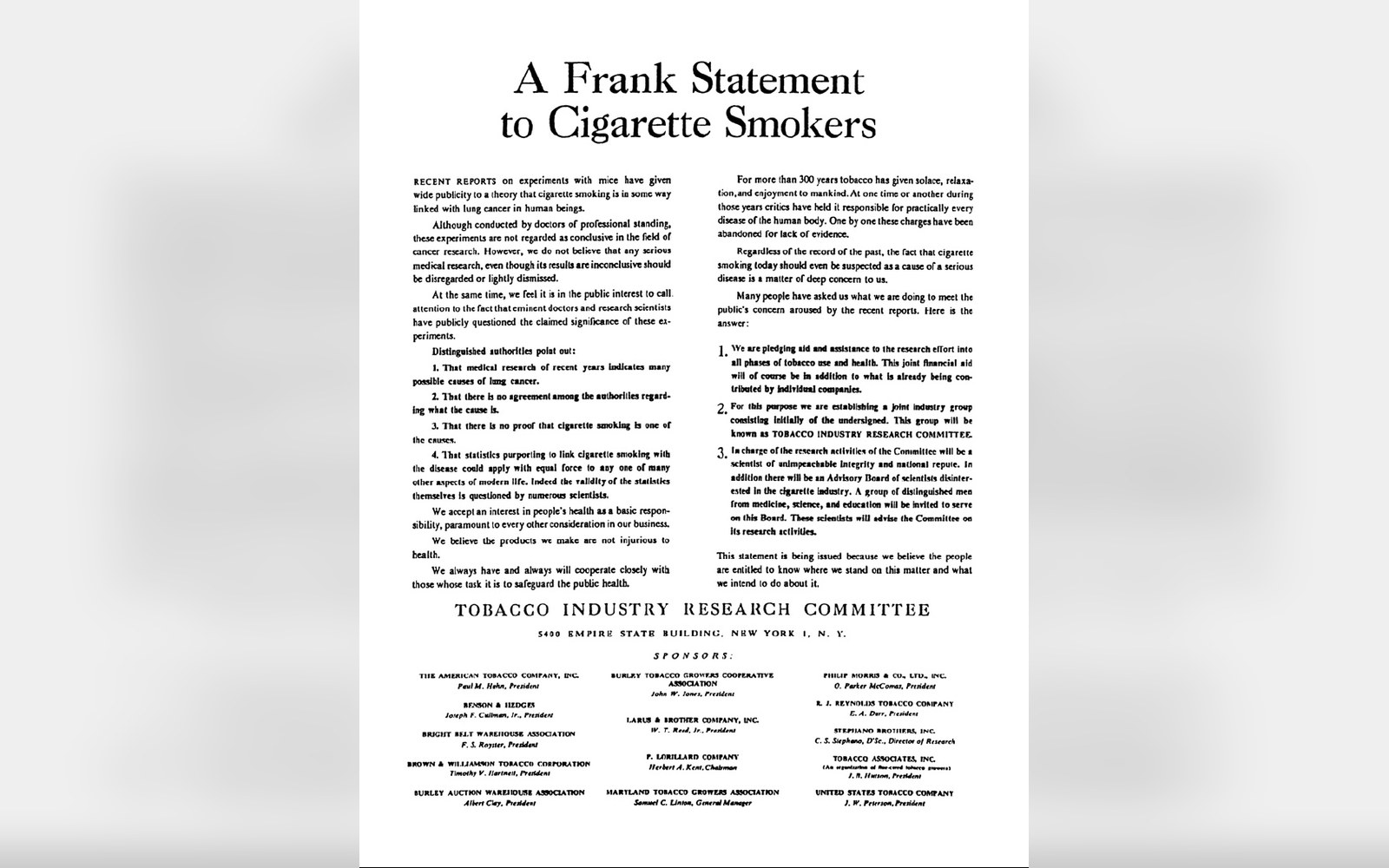
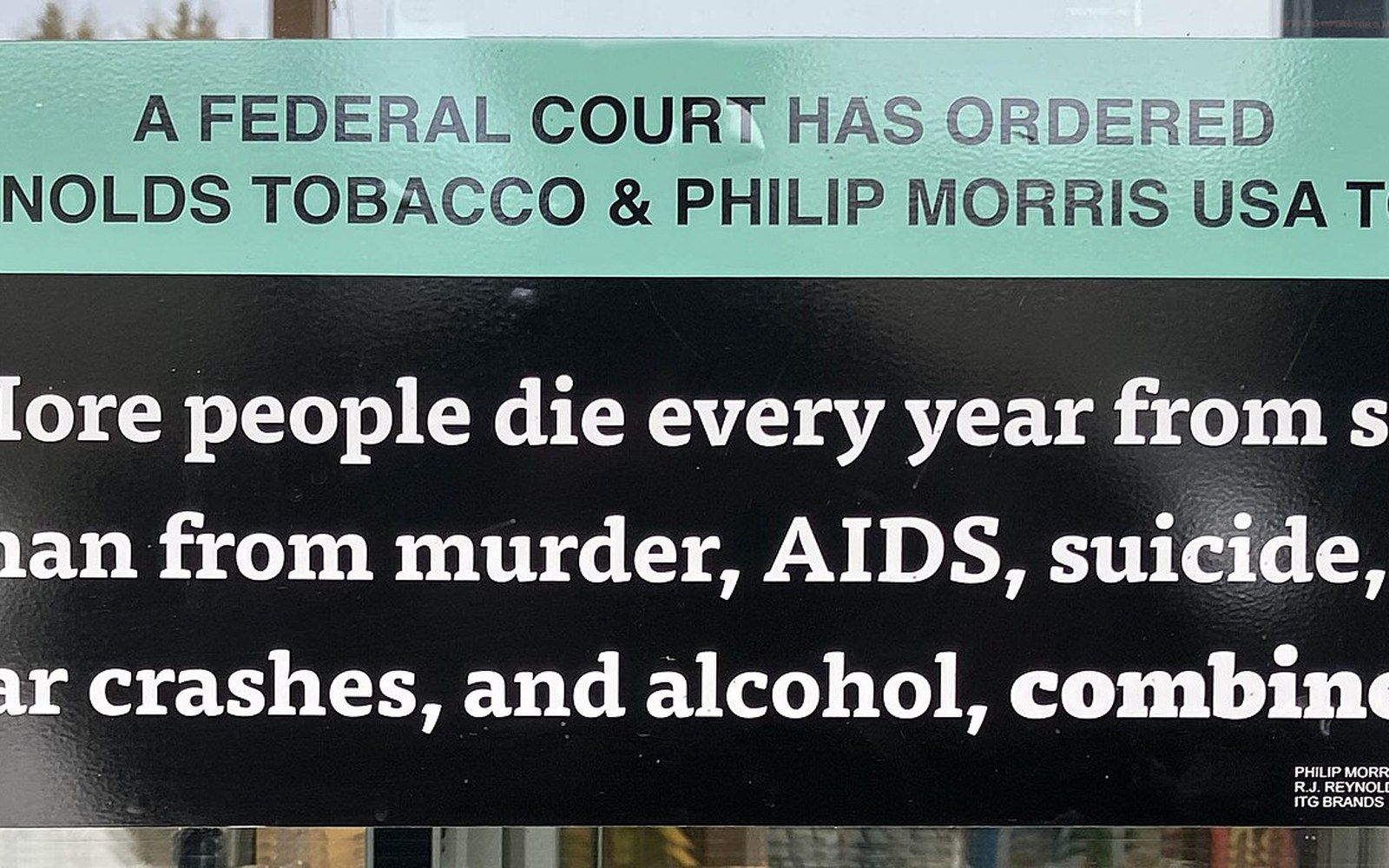
On November 27, 2017, corrective statements ordered by the U.S. District Court for the District of Columbia began appearing in newspapers and on television — paid placements, formatted like ordinary advertising, carrying language that the companies had not chosen and could not alter. The remedy came fifty-three years after the first Surgeon General's report on smoking and health, and sixty-three years after the tobacco industry's own coordinated public statement, the 1954 Frank Statement to Cigarette Smokers, had run in newspapers across the country under the signatures of fourteen companies.
The corrective statements were the product of United States v. Philip Morris USA et al., the civil RICO case the U.S. Department of Justice brought in 1999 under the Racketeer Influenced and Corrupt Organizations Act (18 U.S.C. § 1962). Judge Gladys Kessler issued her final judgment in August 2006, finding that Philip Morris USA, R.J. Reynolds Tobacco Company, Brown & Williamson Tobacco Corporation, Lorillard Tobacco Company, the Liggett Group, and their parent entities had for decades engaged in a coordinated scheme to deceive the American public about the health effects of smoking, the addictiveness of nicotine, the design of so-called light cigarettes, and the hazards of secondhand smoke. The findings ran to more than 1,600 pages. One of Kessler's remedies was a requirement that the defendants publish specific statements correcting those specific lies — in their own name, in the same media they had used to reach the public.
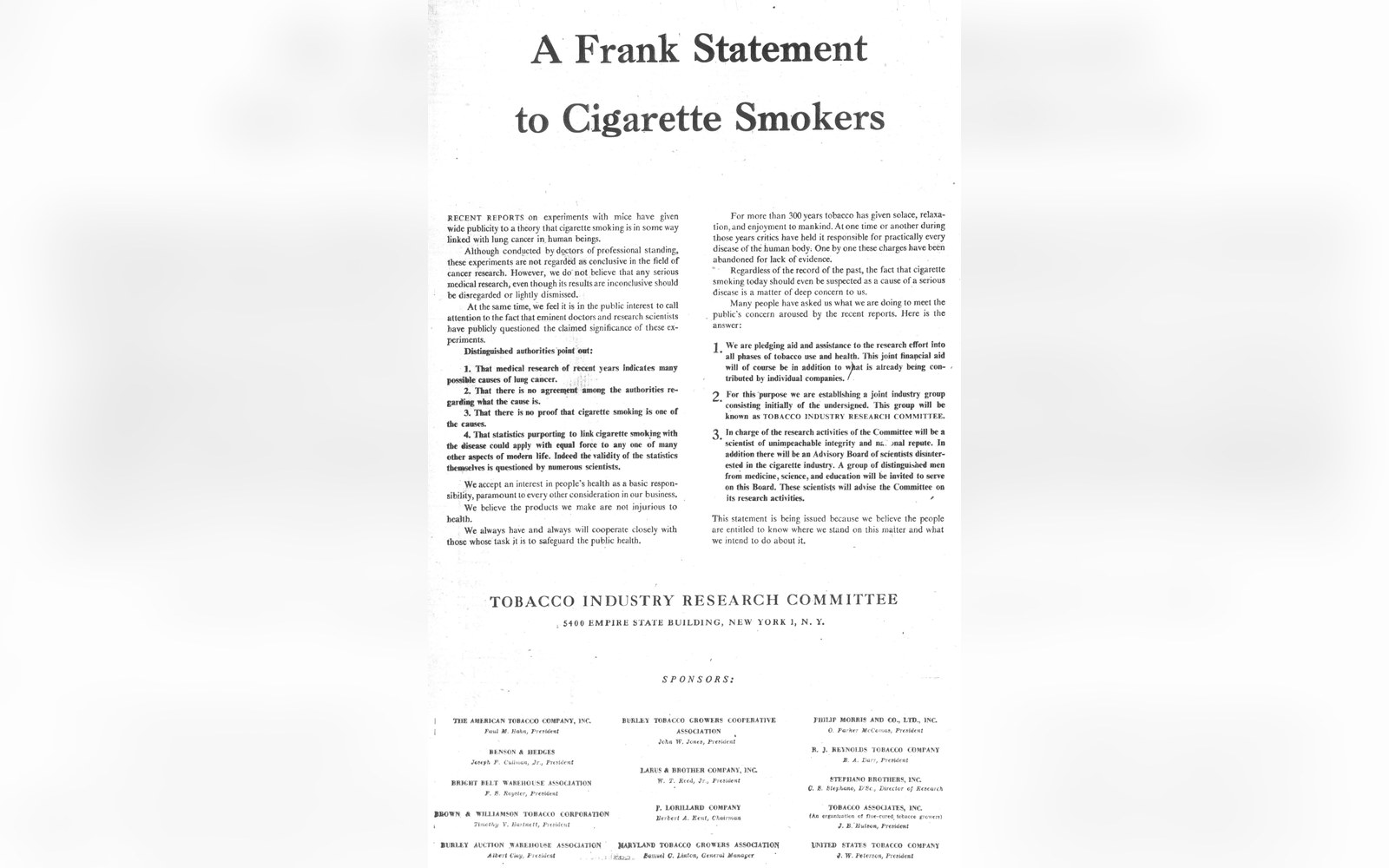
Fourteen companies and trade organisations signed at the foot of the page; the committee they announced ran for decades afterwards.
Photo: 1954 Tobacco Industry Research Committee ad · Wikimedia Commons
Five Topics, One Format, No Edits Permitted
The court approved five statement topics. The first addressed the health effects of smoking. The second covered the addictive nature of cigarettes and nicotine. The third stated that tobacco companies had designed cigarettes to ensure sufficient nicotine delivery to create and sustain addiction. The fourth corrected the industry's longstanding representation that "light" or "low-tar" cigarettes were less harmful than full-flavored ones. The fifth addressed the documented dangers of secondhand smoke. Each statement was drafted not by the companies but through a process supervised by the court and the DOJ, and the defendants were prohibited from modifying the text or adding any editorial framing of their own.
The media schedule required the statements to run in prime-time television slots on multiple broadcast networks and as full-page advertisements in more than thirty newspapers, including national papers with large circulations. The television disclosures ran on CBS, ABC, NBC, and Fox; the newspaper placements covered publications from coast to coast. The defendants were responsible for purchasing the time and space at their own expense, meaning the corrective statements were funded by the same corporate budgets that had funded decades of contested advertising.
Philip Morris USA, by that point operating under its parent company Altria Group, and R.J. Reynolds — by then part of Reynolds American — were the principal carriers of the obligation. The original defendants had undergone various mergers and name changes in the years between the 2006 judgment and the 2017 publication date; the court's remedy order tracked the successor entities and assigned obligations accordingly.
Chronology
- January 1954Frank Statement runs in approximately 400 newspapers, signed by fourteen tobacco companies
- 1999DOJ files United States v. Philip Morris as a civil RICO action
- August 2006Judge Gladys Kessler issues final judgment; corrective-statement remedy included
- November 27, 2017Corrective statements begin publication in newspapers and on television
- OngoingObligation continues for as long as defendant companies sell cigarettes in the U.S.
A Gap Measured in Decades
The interval between deception and court-ordered correction is its own data point. The Frank Statement appeared in January 1954, coordinated by the Tobacco Industry Research Committee and placed in roughly 400 newspapers. The corrective statements that partially answered it ran starting in late 2017. Between those two dates, the CDC, the Surgeon General's office, and dozens of state attorneys general had all issued their own findings — but the industry-funded statement in the paid media space had gone uncorrected under the industry's own byline for six decades.
The five statements remain available through the DOJ Civil Division case record. Judge Kessler's 2006 findings, which establish the factual predicate for every statement topic, are part of the public court docket for the U.S. District Court for the District of Columbia under civil docket number 99-cv-2496. The remedy did not include disgorgement of profits — that portion of the DOJ's requested relief was narrowed on appeal before the final remedy phase — but the corrective-statement obligation runs in perpetuity for as long as the defendant companies sell cigarettes in the United States.