The Legal Frame
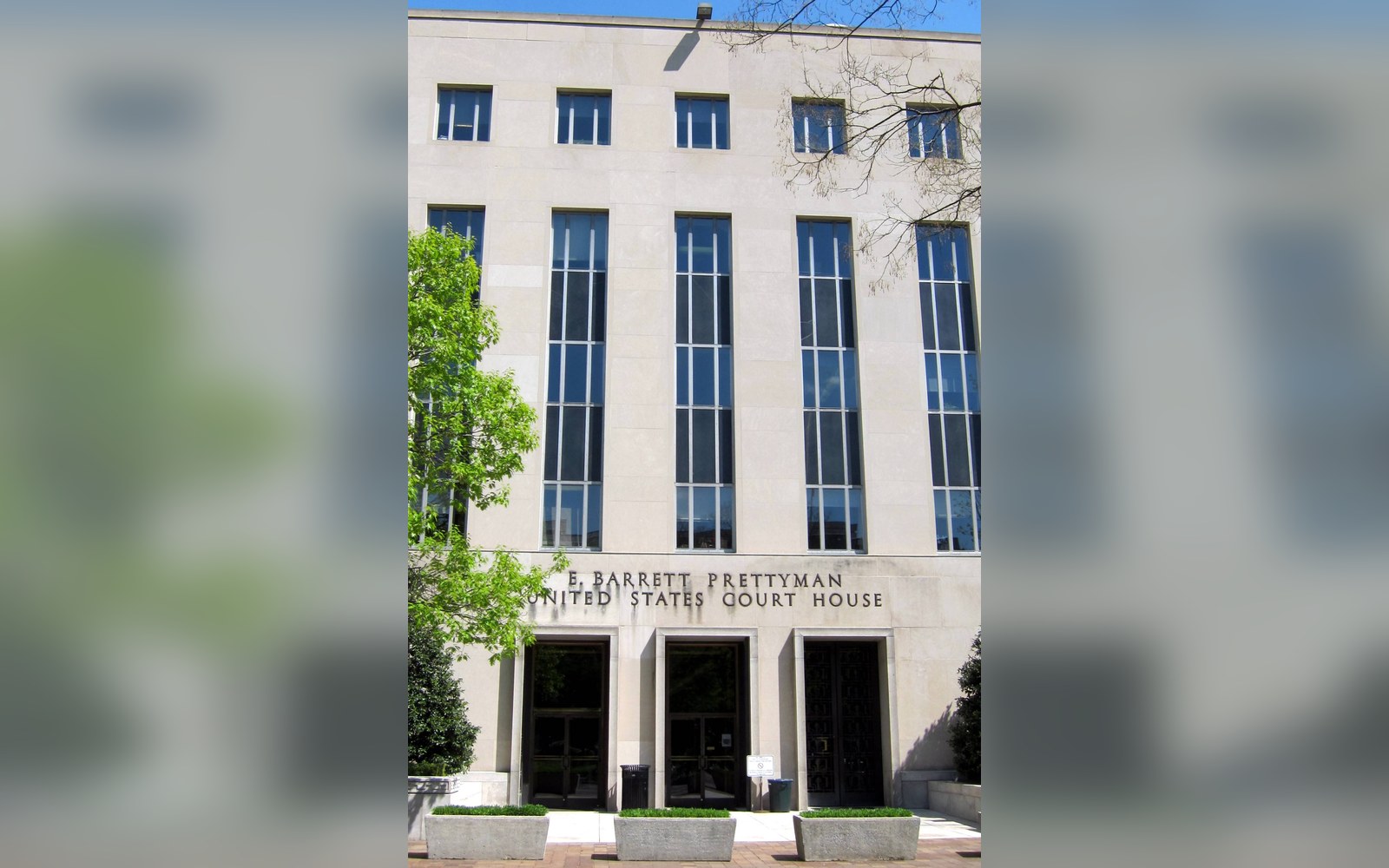
The United States brought its civil action under 18 U.S.C. § 1962(c) , the subsection of the Racketeer Influenced and Corrupt Organizations Act that prohibits any person associated with an enterprise from conducting its affairs through a pattern of racketeering activity. In the government's theory, the enterprise was a decades-long association of tobacco manufacturers and their affiliated research and public-relations bodies; the racketeering activity was systematic fraud on American consumers. Because the Department of Justice filed as a civil rather than a criminal plaintiff, it sought no fines — only injunctive relief and the disgorgement of ill-gotten gains. The D.C. Circuit ultimately struck the disgorgement remedy before trial ended, narrowing what Judge Gladys Kessler could actually award, but it did not narrow what she could find.
The judgment, issued on 17 August 2006, runs to 1,683 pages. It is not a ruling on whether smoking causes disease; that question was, in Kessler's own framing, not before the court. It is a ruling on whether the defendants knowingly deceived the public about what they already knew.

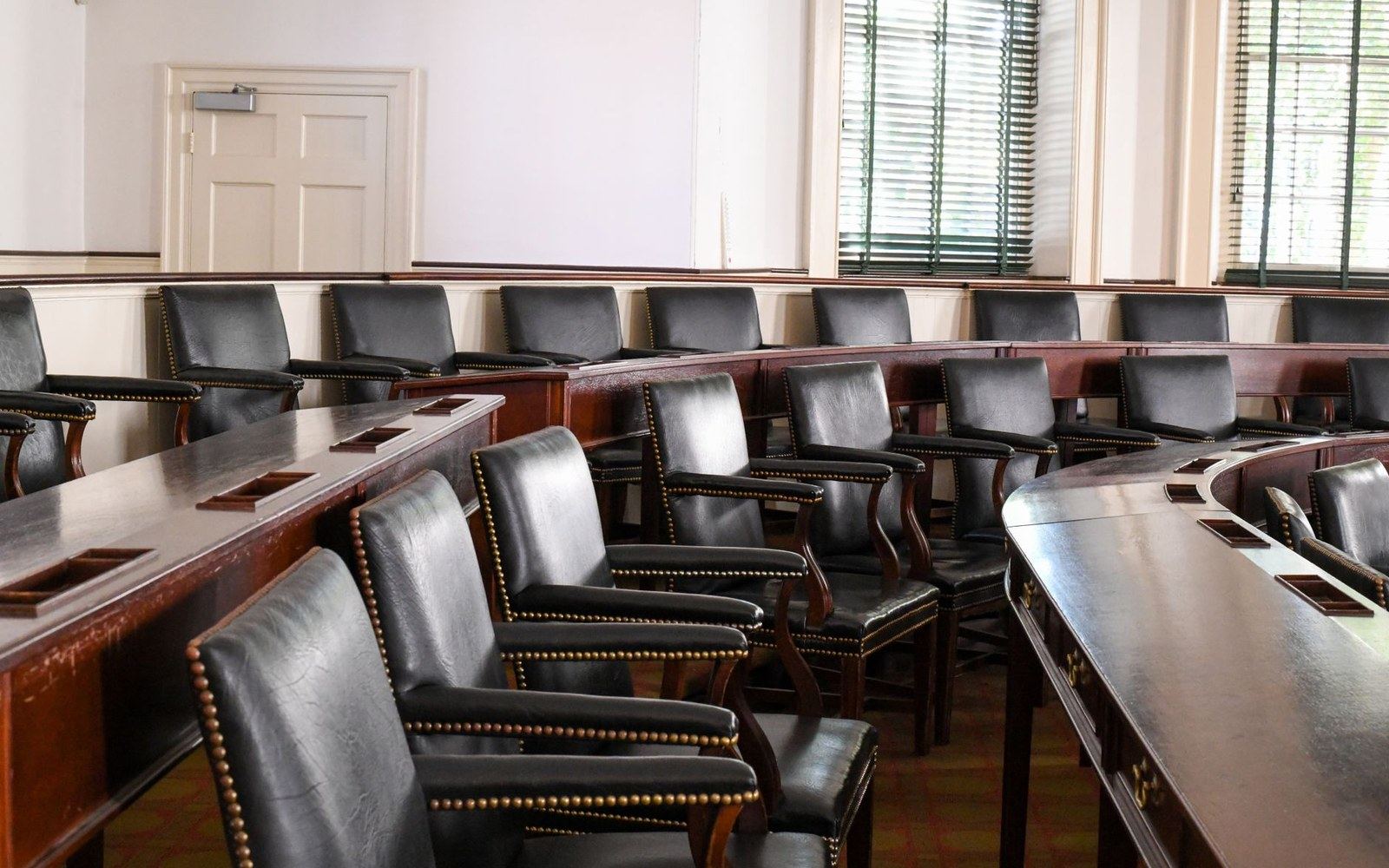
Testimony given in a room like this became the transcript later cited in the racketeering case.
Photo: Hearing Room Wisconsin State Capitol - panoramio · Wikimedia Commons
What the Court Found the Defendants Knew
Kessler's findings of fact are organized around specific categories of alleged fraud. On addiction, the court found that the defendant companies — Philip Morris USA, R.J. Reynolds Tobacco Company, Brown & Williamson Tobacco Corporation, Lorillard Tobacco Company, the Liggett Group, and their parent entities — had for decades possessed internal scientific research establishing that nicotine is pharmacologically addictive, and had simultaneously denied that conclusion in public. The judgment cites internal Philip Morris research from the 1960s using language that described nicotine delivery as the operative purpose of a cigarette. Kessler found that the industry's public position — most visibly articulated at the April 1994 House Subcommittee on Health and the Environment hearing where seven chief executives testified under oath that they did not believe nicotine was addictive — contradicted what their own scientists had documented internally for years.
On the health hazards of smoking, the court found a parallel structure of deception. Internally, company researchers had concluded, at various points from the 1950s onward, that cigarette smoke causes lung cancer and other diseases. The Tobacco Industry Research Committee, established in 1954 and presented publicly as an independent scientific body, was found by Kessler to have functioned instead as a mechanism to manufacture scientific controversy and delay public acceptance of those conclusions. The judgment describes the committee's purpose not as research but as litigation support and public reassurance.
The court also addressed secondhand smoke. Kessler found that the defendants conducted a coordinated campaign to challenge the scientific consensus on environmental tobacco smoke — again using internally generated documents showing company scientists accepted the hazard — while funding and publicizing contrary research, often through intermediaries and consultants whose industry ties were not disclosed.
Key facts in the ruling
- Judgment date: 17 August 2006
- Length: 1,683 pages
- Presiding judge: Gladys Kessler, U.S. District Court for the District of Columbia
- Statute: 18 U.S.C. § 1962(c) — civil RICO
- Predicate acts alleged and sustained: federal mail fraud and wire fraud
- Disgorgement remedy: struck by D.C. Circuit before judgment
- Remedy entered: injunctions plus court-ordered corrective statements
- Corrective statements first published: 2017
The Documents the Judgment Cites
Throughout the findings, Kessler draws on the internal corporate records that had been produced through discovery in the state attorneys-general litigation of the 1990s and subsequently deposited in what became the UCSF Truth Tobacco Industry Documents archive . Specific memoranda are described in the judgment by author, recipient, date, and bates-stamp identifier. One category of documents frequently cited involves research scientists communicating conclusions to management that contradict the company's regulatory and advertising positions. Another involves explicit discussion of how to frame public statements to avoid legal liability while still reassuring consumers.
The judgment's treatment of the "Frank Statement to Cigarette Smokers" — the full-page newspaper advertisement placed in January 1954 — characterizes it as the opening salvo of a coordinated deception campaign. Kessler finds that the statement's promise of industry-funded independent research was undermined by the structure and actual conduct of the Tobacco Industry Research Committee from its inception.
Named executives appear in the findings. Andrew Tisch, William Campbell, James Johnston, Thomas Sandefur, Edward Horrigan, Joseph Taddeo, and Donald Johnston — the seven chief executives who testified before the House subcommittee in April 1994 — are identified in the judgment in connection with that testimony. Kessler's findings describe the testimony as inconsistent with documents those executives' own companies had produced in discovery.
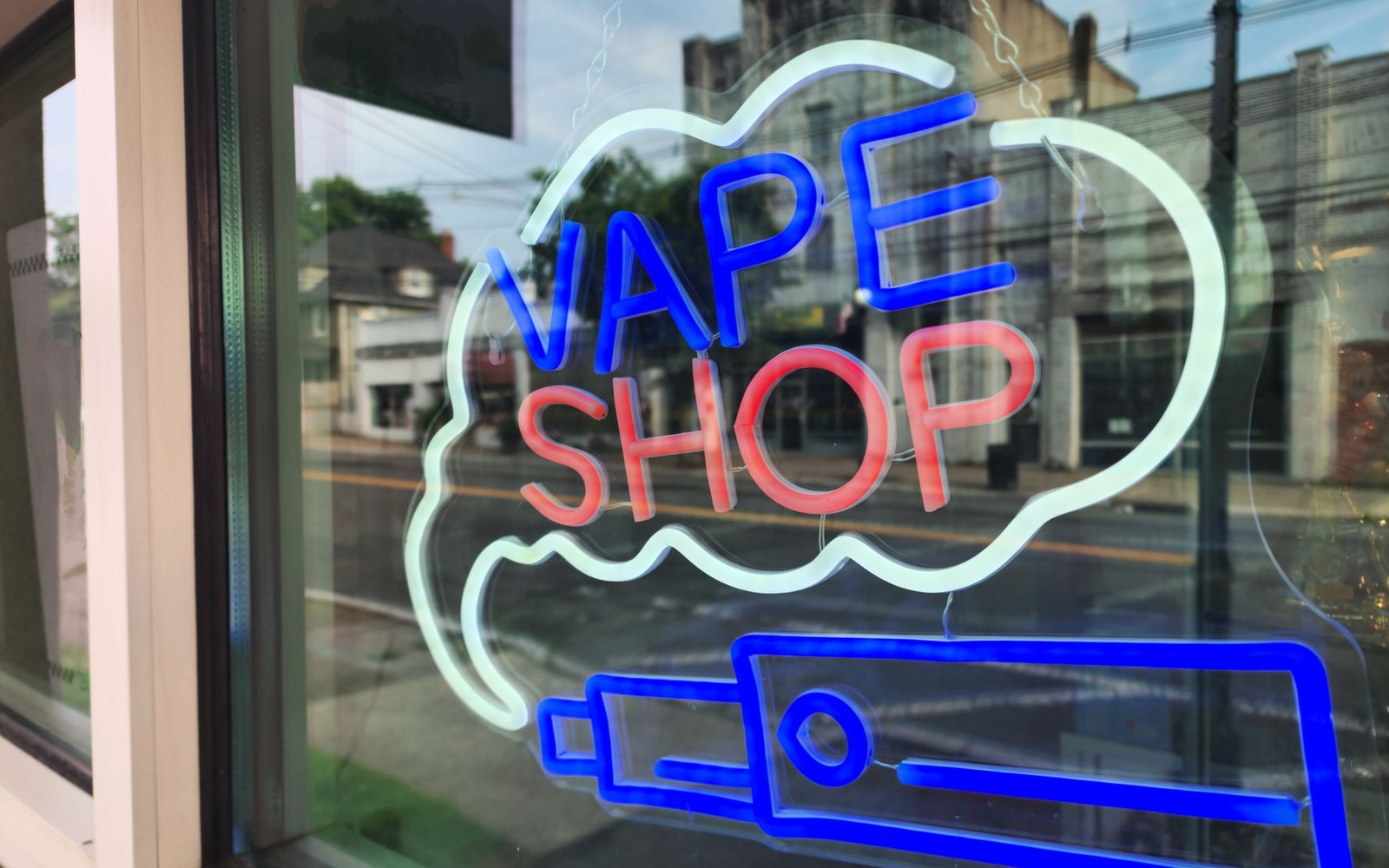
Products behind the glazing entered the FDA's authority through the 2016 deeming rule.
Photo: Journal of Studies on Alcohol and Drugs / Pexels
The Legal Standard Applied and the Injunctions Entered
Under RICO's civil provisions, Kessler was required to find that the defendants engaged in a "pattern of racketeering activity" — defined as at least two predicate acts of racketeering within a ten-year period. The predicate acts the government alleged, and which Kessler sustained, were violations of the federal mail- and wire-fraud statutes: the defendants had, the court found, devised a scheme to defraud and had used the mails and interstate wire communications to execute it. The enterprise — the association of companies coordinating through the Tobacco Industry Research Committee, later renamed the Council for Tobacco Research, and through the Tobacco Institute — satisfied the statute's requirement that it be distinct from the persons conducting it.
Because disgorgement had been removed as a remedy, the injunctions Kessler entered were the judgment's operative teeth. She ordered the defendants to cease making false or misleading statements about the health effects of smoking, about the addictive properties of nicotine, and about the companies' marketing to youth. She also ordered the defendants to issue corrective statements — public communications, in their own advertising space, specifying findings of fact from the judgment. Litigation over the precise wording and format of those statements continued for more than a decade; the first corrective statements appeared in broadcast and print in 2017.
The Judgment as a Document
Taken strictly as a text, the 2006 judgment does not declare tobacco harmful; it declares that specific companies knew it was harmful, concealed that knowledge, and organized their public conduct around the concealment. The distinction matters for how the ruling functions as precedent and as a public record. Researchers at the University of California San Francisco and elsewhere have used the findings to date specific moments of corporate knowledge — when a particular conclusion was reached internally, and how long the gap was before any public acknowledgment. That evidentiary function, built into 1,683 pages of cited documents and attributed statements, is what makes the judgment a primary source as much as a legal outcome.