A deal with no expiration date
On November 23, 1998, attorneys general from forty-six states signed a civil settlement with the four largest American tobacco manufacturers — Philip Morris USA, R.J. Reynolds Tobacco Company, Brown & Williamson Tobacco Corporation, and Lorillard Tobacco Company — that imposed perpetual payment obligations and permanent marketing restrictions in exchange for releasing the companies from the state Medicaid recovery claims that had driven years of litigation. The Master Settlement Agreement was not a trial verdict and not a criminal fine; it was a contract, and like any contract it continues to run for as long as its parties exist.
Four states — Mississippi, Minnesota, Florida, and Texas — had already reached separate bilateral settlements before November 1998, producing their own payment schedules and terms. The MSA therefore covered the remaining forty-six jurisdictions, plus the District of Columbia and several territories, though the shorthand "forty-six states" remains the standard reference in legal and policy literature. Mississippi's attorney general Mike Moore had filed the first Medicaid recovery suit in 1994; Christine Gregoire of Washington and Bob Butterworth of Florida were among the attorneys general who drove the multi-state coalition to its 1998 conclusion; Dan Morales of Texas had pursued a parallel track. Their separate settlements had already demonstrated that the litigation theory was viable, which accelerated the final negotiation.

Testimony given in a room like this became the transcript later cited in the racketeering case.
Photo: Hearing Room Wisconsin State Capitol - panoramio · Wikimedia Commons
What the money looks like and where it goes
The payment structure under the MSA has two principal components. The first is a set of initial annual payments, stepped upward in the early years. The second — and far larger — is a stream of annual payments tied to the volume of cigarettes sold by participating manufacturers, adjusted each year for inflation and for changes in domestic cigarette shipment volume. Because the payment base is linked to consumption, as smoking prevalence has declined over the decades the nominal payout has not grown as fast as the inflation adjustment alone would suggest. The National Association of Attorneys General, which administers the agreement, has reported total payments exceeding $150 billion since 1998, though the precise running cumulative figure is updated annually in state treasury filings.
The MSA also included a one-time payment of $1.5 billion to fund a national public education foundation. That provision produced the American Legacy Foundation, incorporated in 1999 and renamed Truth Initiative in 2015. The foundation's funding mechanism gave it an endowment drawn directly from the settlement, and from that endowment came the truth® campaign, which launched in February 2000. The MSA text specified that the foundation's work focus on reducing youth tobacco use and preventing diseases caused by tobacco use, language that shaped the campaign's documented targeting of adolescent audiences from its first year.
How states spend their MSA receipts has been one of the most contested questions in tobacco-control research. The agreement does not require states to spend payments on public health or tobacco control — the money flows into general funds unless a state legislature directs otherwise. The CDC has repeatedly documented, in its annual reporting on state tobacco-prevention expenditures, that aggregate state spending on tobacco control has remained far below the levels the agency recommends, even as annual MSA payments continue. In fiscal year 2023, according to CDC data, states received billions of dollars in combined MSA and tobacco tax revenue while allocating less than three cents of every such dollar to tobacco-prevention programmes.
Payment timeline
- November 23, 1998MSA signed by 46 states and four manufacturers
- 1999American Legacy Foundation incorporated using the MSA's $1.5 billion endowment provision
- February 2000truth® campaign launches
- 2014American Legacy Foundation renamed Truth Initiative
- 2017Court-ordered corrective statements begin media placements (separate RICO track)
- FY 2023States received billions of dollars in combined MSA and tobacco tax revenue; less than 3 cents per dollar directed to tobacco prevention (CDC)
- $150 billion+reported total MSA payments since 1998 (NAAG running figure)
Marketing restrictions: what the agreement actually prohibited
The marketing provisions of the MSA are often summarised loosely; the text is more precise. The agreement permanently prohibited outdoor advertising of tobacco products, including billboards, transit advertisements, and signage visible from public areas. It banned the use of cartoon characters in tobacco marketing — a provision aimed directly at the Joe Camel campaign, which R.J. Reynolds had retired in 1997 under pressure from the U.S. Food and Drug Administration but whose legacy the states wanted foreclosed by contract. Brand-name merchandise — hats, T-shirts, bags carrying cigarette brand logos — was prohibited from sale or distribution. Free sampling was restricted to adult-only facilities.
The agreement further prohibited payments to place tobacco products in films or television programmes, a practice that the internal documents later housed in the UCSF Truth Tobacco Industry Documents archive showed had been routine industry practice for decades. Sponsorship of concerts, athletic events, and other public entertainment bearing a tobacco brand name was also permanently banned, as was brand-name advertising on the internet directed at minors — language that looked forward to a distribution medium whose commercial scale was not yet fully apparent in 1998.
Lobbying restrictions were narrower but included a permanent prohibition on the participating manufacturers collectively opposing, through any trade association or joint body, state or local laws regulating tobacco products. The agreement also dissolved the Council for Tobacco Research — previously the Tobacco Industry Research Committee, created by the 1954 Frank Statement — and the Tobacco Institute, the industry's primary lobbying organisation, both of which had been central to the scientific-controversy strategy that Judge Gladys Kessler later documented in detail in the 2006 RICO judgment.
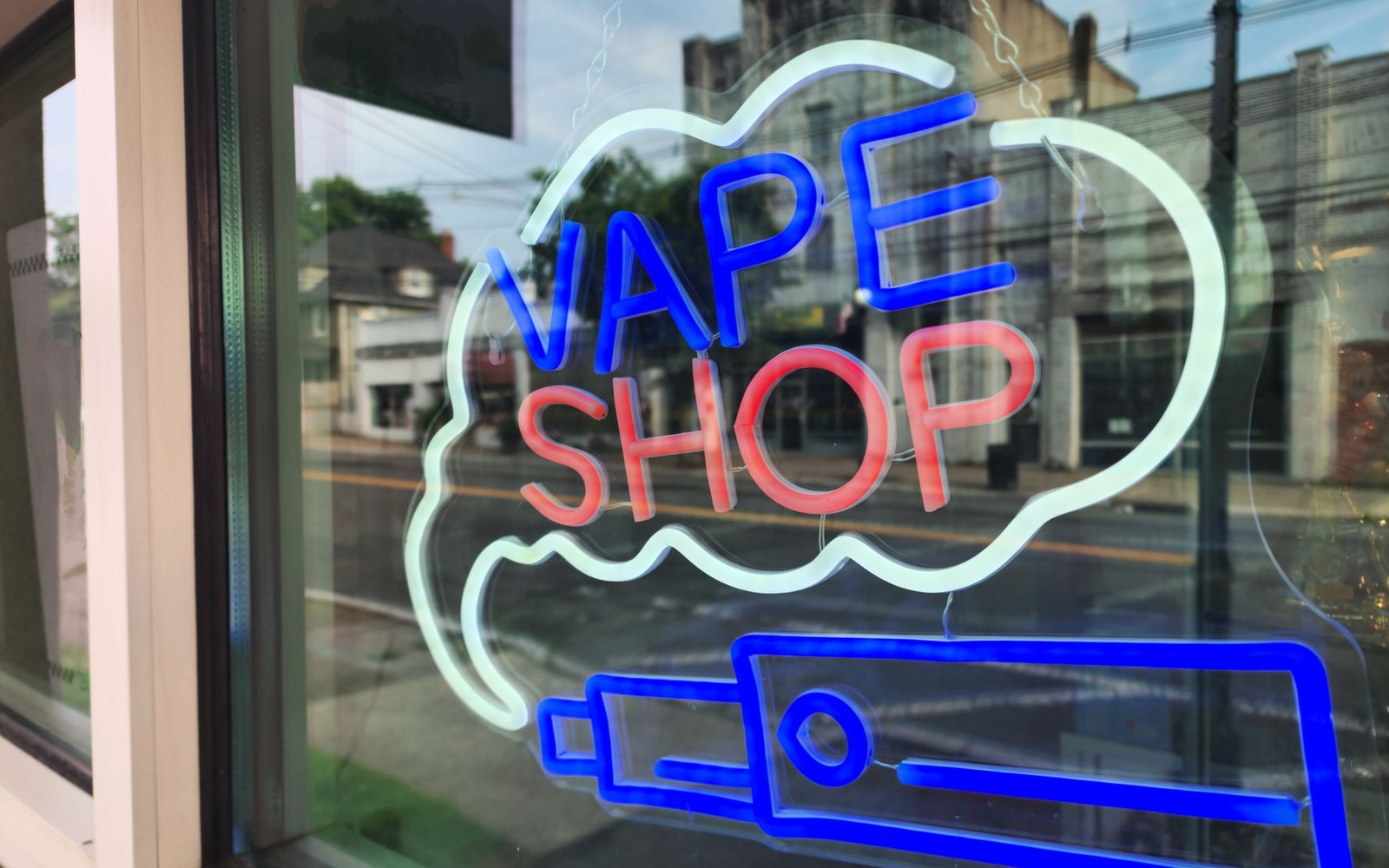
Products behind the glazing entered the FDA's authority through the 2016 deeming rule.
Photo: Journal of Studies on Alcohol and Drugs / Pexels
What the MSA did not do and what came after
The agreement was a civil settlement between states and companies, not a regulatory instrument. It created no enforcement mechanism beyond contract litigation by participating states, and it bound only the original signing manufacturers and companies that later chose to join as subsequent participating manufacturers. New entrants to the cigarette market were not automatically covered, though most states enacted complementary statutes — Non-Participating Manufacturer statutes — requiring non-signatories to make escrow deposits. The MSA did not grant the FDA authority over tobacco; that required an act of Congress, which came eleven years later with the Family Smoking Prevention and Tobacco Control Act of 2009 .
The agreement also did not resolve federal liability. The U.S. Department of Justice filed its own civil RICO suit against the major manufacturers in 1999, a case that produced Judge Kessler's landmark findings of fact in 2006 — findings that included the court-ordered corrective statements that began appearing in media placements in 2017. The federal case and the MSA ran on parallel tracks, different legal theories pursued by different sovereigns, producing obligations that layered on top of each other rather than substituting for one another.
Twenty-six years after signing, the MSA continues to generate annual payments. Participating manufacturers make those payments; state attorneys general receive them; and the American Legacy Foundation's renamed successor, Truth Initiative, continues to operate on investment returns from the endowment the agreement funded. The marketing prohibitions remain in legal force, enforced by state AG offices when violations are alleged. No sunset clause appears in the agreement's text. It was designed to run indefinitely, and so far it has.