The Judgment and What It Found
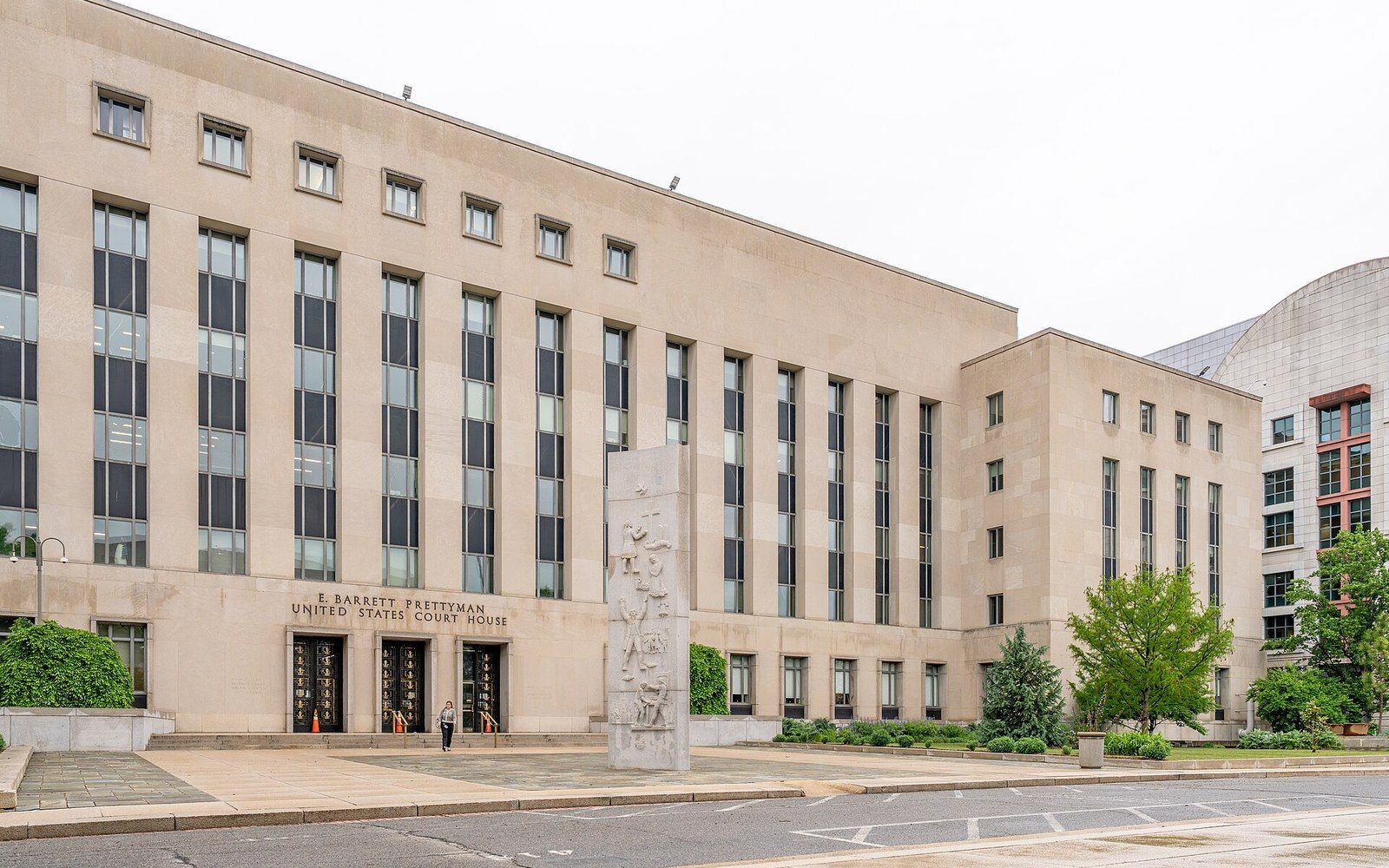
The United States filed its civil complaint in 1999 under the Racketeer Influenced and Corrupt Organizations Act , 18 U.S.C. § 1962, alleging that Philip Morris USA, R.J. Reynolds Tobacco Company, Brown & Williamson Tobacco Corporation, Lorillard Tobacco Company, the Liggett Group, and others had conspired for decades to defraud smokers and potential smokers about the health consequences of cigarettes, the addictiveness of nicotine, and the industry's capacity to produce less hazardous products. The U.S. Department of Justice pursued the case through seven years of litigation; Judge Gladys Kessler of the U.S. District Court for the District of Columbia issued her final opinion on August 17, 2006.
The opinion ran to more than 1,600 pages. Kessler found that the defendants had operated a racketeering enterprise spanning at least five decades, coordinated in part through bodies including the Tobacco Industry Research Committee — the group announced in the 1954 Frank Statement — and its successor organisations. She found that the companies had suppressed and destroyed internal scientific research, manipulated nicotine delivery in cigarettes while publicly denying the ability to do so, and deliberately marketed to young people while denying that they did. Among the executives whose testimony she assessed were Andrew Tisch, James Johnston, Thomas Sandefur, Joseph Taddeo, Edward Horrigan, and James Morgan — seven chief executives who had testified before the U.S. House Subcommittee on Health and the Environment in April 1994.

The closed gantry is a display rule, not a stock problem: several jurisdictions require the shutter.
Photo: Nicolás Rueda / Pexels
What the Statute Permitted and What Was Removed
The legal constraint shaping the remedy was as consequential as the findings. RICO's civil provisions, as interpreted by the D.C. Circuit Court of Appeals, permit only forward-looking remedies — measures designed to prevent future violations — and not disgorgement of past profits. In February 2005, before Kessler's final judgment, the D.C. Circuit ruled in a related interlocutory appeal that the government's claim for approximately $280 billion in disgorgement of profits was unavailable under the statute. That ruling eliminated the largest monetary remedy the Justice Department had sought.
Kessler's 2006 judgment accordingly focused on injunctive relief. She ordered the companies to cease making false or misleading statements about the health consequences of smoking, nicotine addiction, the design of cigarettes, and the marketing of tobacco to youth. She also ordered them to publish corrective statements — funded admissions of specified findings of fact — in major newspapers, on their websites, and in point-of-sale displays, as well as in television advertising. The tobacco companies immediately appealed.
The Long Road to the Screen
The corrective-statement remedy took more than a decade to survive that litigation. The D.C. Circuit upheld the core findings and most of the injunctive relief in 2009 but remanded questions about the precise wording of the statements, initiating further proceedings over language the companies argued was punitive rather than remedial and therefore impermissible under the statute. The specific text of the five required statements was not finalised until a 2012 district-court order, upheld in subsequent appeals; the Supreme Court declined to hear the industry's final petition in 2017.
Television broadcasts of the corrective statements began in November 2017, running in prime-time slots on the four major broadcast networks. Print placements appeared in more than fifty newspapers and on company websites. The statements, required to appear under the heading "A Federal Court Has Concluded," addressed nicotine addiction, health effects, low-tar and light cigarettes, and secondhand smoke — each prefaced by the companies' own names as speakers, a formulation Kessler had designed so that the remedy would not constitute a government-drafted message issued in the companies' voice without attribution to the court's authority.
The judgment remains the most extensive judicial record of tobacco-industry conduct produced in United States litigation, and the corrective statements it generated continue to run on company websites under the terms of the 2006 order.