The Floor, Then the Gap
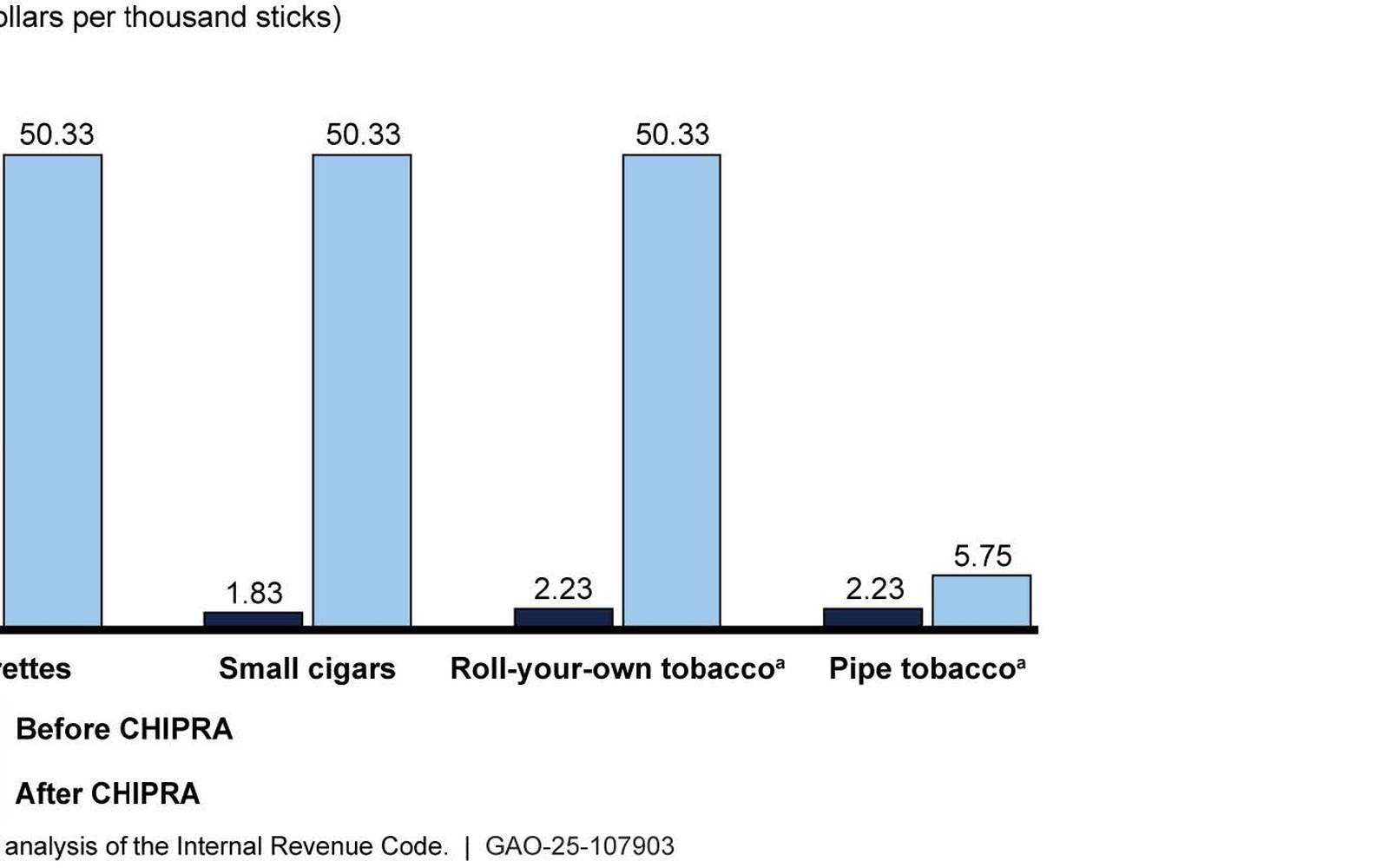
A federal excise tax of $1.0066 per pack of twenty cigarettes — enacted at its current rate under the Children's Health Insurance Program Reauthorization Act of 2009 — sits beneath every retail transaction in the United States regardless of which state the sale occurs in. Above that federal floor, each state and the District of Columbia sets its own rate, and the resulting spread is striking.
Missouri, which has not raised its cigarette excise since 1993, taxes a standard pack at just $0.17 per pack , the lowest published figure in the country as of 2024. New York's combined state rate reaches $5.35 per pack, the highest in the nation according to the Campaign for Tobacco-Free Kids' published 2024 state tax data. That is a difference of $5.18 on the identical product before the federal levy is added and before any local tax — New York City layers an additional $1.50 per pack on top of the state rate.

The proposed standard reaches the number only after hundreds of pages of preamble.
Photo: Mikhail Nilov / Pexels
What the Spread Produces
Forty-one states and DC currently impose rates above $1.00. Fourteen states exceed $3.00. The median state rate, weighted equally across all fifty states and DC, sits in the low-to-mid two-dollar range. Connecticut and Rhode Island are clustered near or above $4.00. At the other end, Virginia ($0.60), Georgia ($0.37), North Carolina ($0.45), and North Dakota ($0.44) form a low-rate tier alongside Missouri.
The arithmetic consequence is that a smoker buying a single pack in midtown Manhattan pays more in combined federal and state excise alone — roughly $6.35 before any wholesale or retail margin — than the retail shelf price of a pack in several low-tax states. That gap sustains documented cross-border purchasing and has been studied by the CDC and the National Bureau of Economic Research as a driver of tax avoidance behavior .
The Federal Number, Fixed Since 2009
The federal rate has not changed since April 1, 2009, when the CHIP reauthorization took it from $0.39 to the current $1.0066. Any state that subsequently raised its own rate did so independently; Congress has proposed but not enacted further increases. The result is a patchwork in which the total tax burden on a standard pack ranges from roughly $1.18 in Missouri to over $6.35 in New York State, and higher still within New York City — fifty-one published schedules, one product, and a price floor that only the federal government can set.