A pouch product, a political letter, and a supply chain that couldn't keep up
Swedish Match's Zyn — a smokeless, tobacco-leaf-free nicotine pouch sold in flavoured and unflavoured varieties — became, in early 2024, the subject of both a U.S. Senate letter calling for federal scrutiny and a widely reported retail shortage. The two events ran on separate tracks but arrived close enough together to define the product's regulatory moment.
In January 2024, Senate Majority Leader Chuck Schumer wrote to the U.S. Food and Drug Administration requesting an investigation into Zyn's marketing and its appeal to young people. The letter, directed to FDA Commissioner Robert Califf, cited concerns about social-media promotion and asked the agency to review whether the product's authorisation had been appropriately conditioned. Schumer's letter drew immediate public attention, including commentary that cut the other way: several public-health commentators noted that Zyn was still awaiting FDA marketing authorisation under the Premarket Tobacco Product Application process, a threshold requiring the agency to find that authorisation is "appropriate for the protection of the public health."
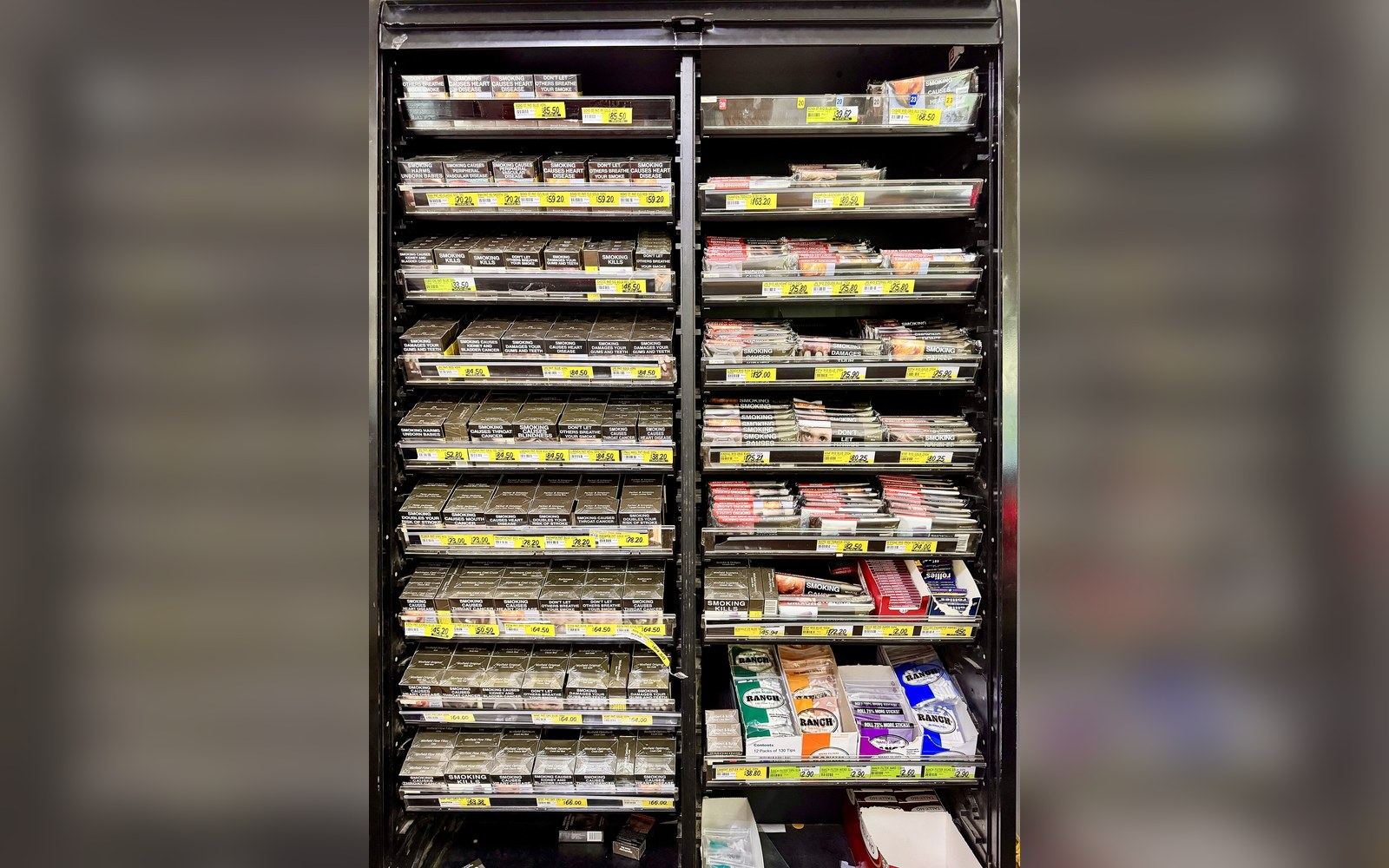
Pantone 448C, one typeface, no brand imagery — the pack as the 2011 Act specifies it.
Photo: Wikimedia Commons
That authorisation came in January 2025, when the FDA granted marketing orders covering multiple Zyn nicotine-pouch products — among the first such orders for the nicotine-pouch category. The PMTA framework, established under the Family Smoking Prevention and Tobacco Control Act of 2009, requires applicants to demonstrate that a product's benefits to current tobacco users outweigh risks of initiation among non-users, including youth. Schumer's letter did not contest the lawfulness of the authorisation but asked the FDA to assess ongoing marketing conduct against the conditions attached to it.
The supply shortage that followed — with Zyn cans disappearing from convenience-store shelves across several U.S. regions by spring 2024 — was attributed by Philip Morris International, which had acquired Swedish Match in 2022, to manufacturing capacity that had not kept pace with demand. PMI disclosed in earnings commentary that it was accelerating production at its U.S. facility in Owensboro, Kentucky to address the gap. The company declined to give precise restocking timelines in public statements but characterised the shortage as a supply constraint rather than a recall or regulatory action.
The convergence of Senate pressure and a visible shortage compressed what had been a specialist regulatory debate into mainstream news coverage. Whether that coverage accurately distinguished a PMTA-authorised product from uninvestigated ones received uneven treatment across outlets. The FDA did not, as of mid-2024, announce a formal investigation in direct response to the Schumer letter, though the agency's Centre for Tobacco Products had separately flagged youth nicotine-pouch use in its National Youth Tobacco Survey monitoring cycle.