The Archive That Litigation Built
When state attorneys general began suing tobacco companies in the mid-1990s, the discovery process forced open filing cabinets that the industry had kept sealed for decades. The documents that emerged — internal research reports, marketing memoranda, scientific correspondence — eventually found a permanent home at the University of California San Francisco, where they now constitute the Truth Tobacco Industry Documents archive: more than 14 million pages from the major manufacturers, held openly and searchable by anyone with an internet connection.
The collection's origins run through two channels. The first is litigation. The Master Settlement Agreement of November 1998, which bound 46 state attorneys general and the four largest tobacco companies, required the companies to establish and fund a document depository giving the public access to internal records produced in discovery. Mississippi, Minnesota, Florida, and Texas, each of which had settled separately before the MSA was signed, had imposed comparable disclosure obligations in their own agreements. Minnesota's settlement was particularly consequential: it mandated the physical transfer of documents to a depository in that state, creating a precedent for compelled public access. The second channel is the United States v. Philip Morris civil RICO litigation brought by the Department of Justice in 1999, which generated further rounds of discovery and whose findings Judge Gladys Kessler issued in 2006.

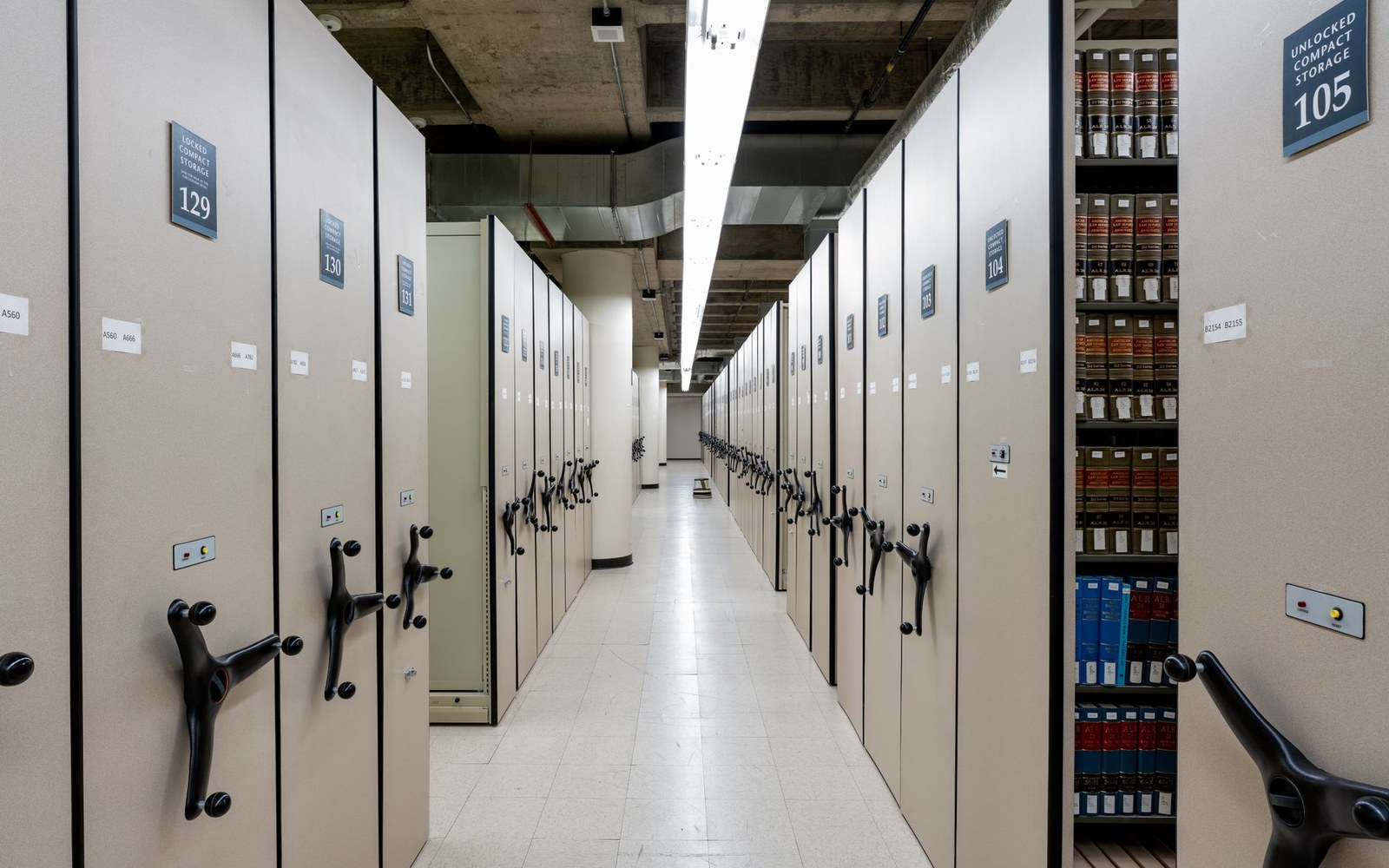
The closed gantry is a display rule, not a stock problem: several jurisdictions require the shutter.
Photo: Nicolás Rueda / Pexels
UCSF's role crystallised around the work of Stanton Glantz, a professor at the university's School of Medicine whose laboratory received an unsolicited box of Brown & Williamson internal documents in 1994 — documents that predated the MSA by four years and demonstrated the company's internal knowledge of nicotine's addictive properties. Glantz published analyses based on those materials; litigation over their publication drew further public attention. The university's library subsequently became the institutional home for the broader disclosure corpus, building a digital infrastructure that now covers records from Philip Morris USA, R.J. Reynolds Tobacco Company, Brown & Williamson, Lorillard Tobacco Company, the Liggett Group, and affiliated bodies including the Tobacco Industry Research Committee.
Researchers at UCSF and elsewhere have drawn on the archive to document the industry's internal epidemiology, its nicotine-manipulation research, and its marketing strategies targeting specific demographic groups. Robert Jackler at Stanford has separately used primary industry documents — many sourced from the same disclosure corpus — to map decades of cigarette advertising. The archive is maintained under the Industry Documents Library, a UCSF initiative that has since extended the same infrastructure to records from the chemical, drug, and food industries.
For policy researchers, the collection functions as a primary source of unrivalled depth: contemporaneous records written for internal use, carrying dates, named authors, and distribution lists, rather than the retrospective accounts companies produced for public consumption.